How To Remove Moss From a Roof?
If you’ve observed green growth on the surface of your house, it’s essential to act promptly and understand the process of moss removal from your roof. Even though moss may appear benign, it can pose significant problems for your roofing system, leading to shingle deterioration and promoting the development of mold and rot.
From tips on hiring a professional to instructions for DIY moss removal, this guide is designed to assist you in addressing unwanted growth on your home’s roof.
Considering hiring a professional for roof cleaning? Check out our article on roof cleaning costs and complete the form below.
DIY vs. Professional Moss Removal for Your Roof
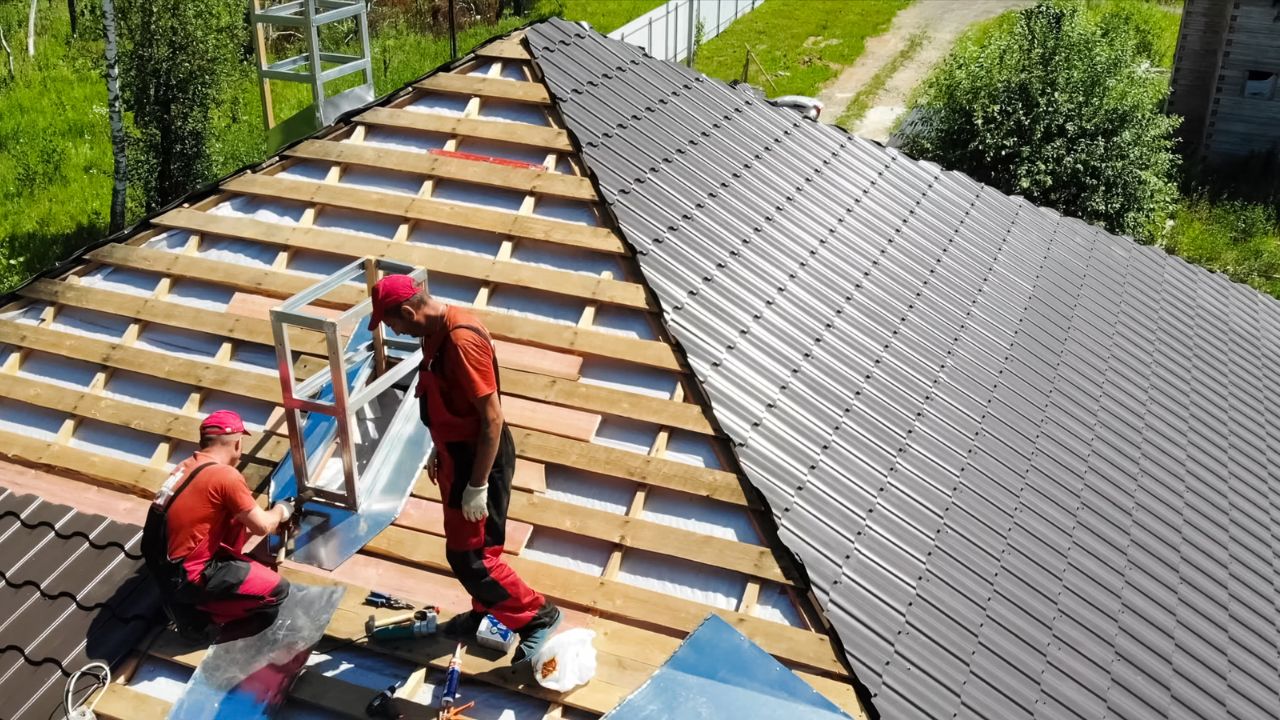
While it’s possible to undertake moss removal on your own, it’s worth considering the option of hiring a professional. If not executed correctly, you run the risk of damaging your shingles, which defeats the purpose of clearing moss in the first place. A professional roofer possesses the necessary expertise and experience to carry out the task correctly, along with access to the appropriate supplies.
Cleaning your roof can be a hazardous endeavor, involving the handling of chemical substances and requiring agility on a ladder. When you enlist the services of a professional, they can also identify any other potential roofing issues, which can be crucial for preventive maintenance.
Need A Roofing Contractor?
Licensed Contractor
Need Roofing Estimate?
Highly Accurate
Want Roofing 3D Rendering?
Showcase Your Design Ideas
Call Us To Discuss More at (561)933-8686
Benefits of Hiring a Professional
When opting to enlist the services of a professional for roof cleaning, it’s crucial to conduct thorough research. Prioritize hiring individuals who are bonded and insured to safeguard against potential accidents. Additionally, reading customer testimonials for any prospective company is essential before making a decision. This step can help you steer clear of contractors who might attempt to impose hidden charges or unnecessary services.
Be cautious of roofing contractors who are reluctant to furnish references, certifications, or reviews, as these could be warning signs. A reputable company should have confidence in its work and readily provide such information.
DIY: Necessary Tools and Materials
If you’re planning to take the DIY approach, you’ll need to gather some essential supplies in advance. You’ll also require a moss-removal solution of some kind. There are numerous products available in the market, so be sure to carefully follow the mixing instructions for optimal results. Incorrect ratios can lead to an ineffective moss-killing solution.
Alternatively, you can create your own moss-removing solution, which is generally less abrasive than commercial chemical options. While a chlorine bleach solution is effective against fungi, mildew, and moss, it may harm nearby plant life. One recipe for an eco-friendly roof-cleaning solution involves mixing dish soap, white vinegar, and water. Transfer your homemade moss removal solution into a pump-style garden sprayer for convenient and even application.
In addition to the moss-removing solution, you’ll need the following items:
Item | Average Cost |
Garden hose with spray nozzle | $30–$70 |
Ladder | $40–$160 |
Pump sprayer or large spray bottle | $10–$20 |
Rubber gloves | $2–$15 |
Safety glasses | $1–$25 |
Safety rope | $80–$160 |
Scrub Brush | $3–$15 |
Soft-bristled brush | $10–$25 |
Need A Roofing Contractor?
Licensed Contractor
Need Roofing Estimate?
Highly Accurate
Want Roofing 3D Rendering?
Showcase Your Design Ideas
Call Us To Discuss More at (561)933-8686
5 Steps For Removing Moss From Your Roof:
Step 1: Ensure Safety First
Prior to commencing moss removal, perform a safety check since you’ll be handling chemicals and navigating a ladder. Wear appropriate attire, including eye protection, rubber gloves, and slip-resistant footwear. Keep a safety rope or harness handy if ascending to the roof’s peak. Shield any nearby plants or landscaping with plastic sheeting. Ensure the ladder is securely closed on a stable, level surface.
Step 2: Gently Rinse the Roof with Water
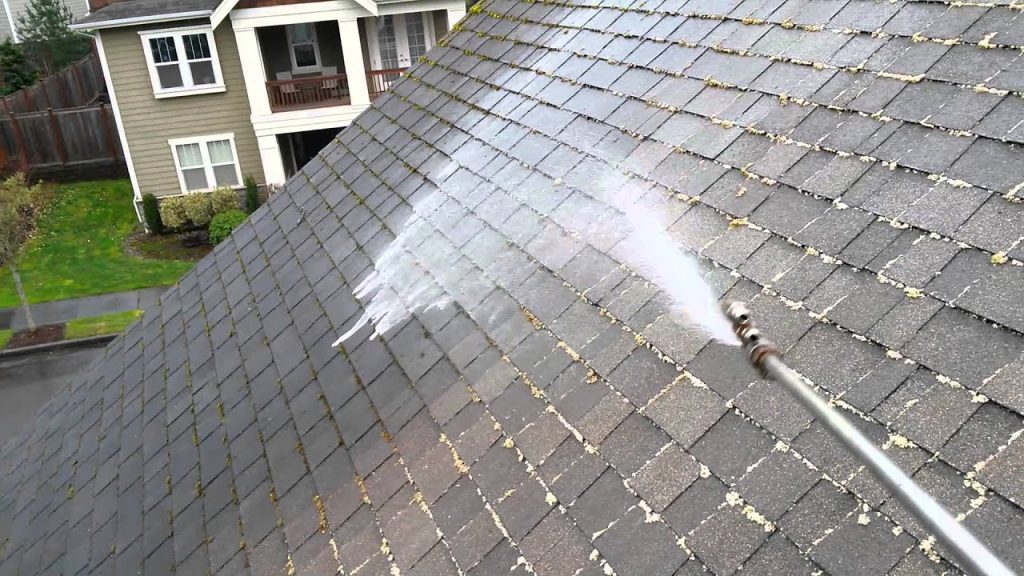
Begin at the top and work your way down, softly spraying water onto the moss-covered areas of your roof. Avoid using a high-pressure washer, as it can be too forceful and may harm your asphalt shingles. Spraying water downward ensures that it flows off without lifting or damaging tiles or shingles.
Step 3: Delicately Remove Moss from Roof Shingles
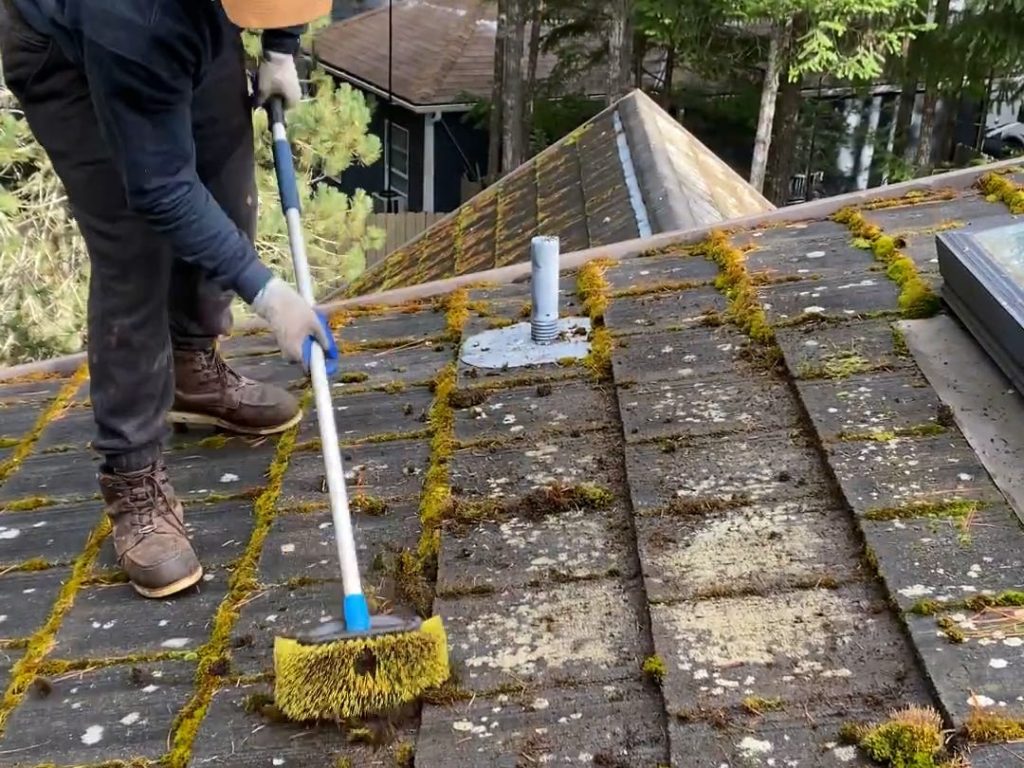
Using your soft-bristled brush, carefully scrape the moss off the shingles or roofing tiles. Work in manageable sections to maintain control over your scrubbing motion, preventing damage, cracking, or tearing of roofing materials, and minimizing the removal of asphalt granules.
Step 4: Apply Moss Remover
Utilize your pump sprayer or large spray bottle to evenly apply moss killer to all affected areas. Ensure thorough saturation of the moss for effective removal. If using a store-bought chemical moss solution, follow the manufacturer’s instructions on the package for the recommended wait time. Homemade moss remover should sit for approximately 20 to 30 minutes.
Step 5: Gently Scrub and Rinse the Roof
Once the moss removal solution has set, softly scrub your roof using the soft-bristle brush. Rinse away any remaining dead moss or residue with a hose, taking care to spray gently and with low pressure to prevent damage to the shingles.
Tips for Preventing Moss Growth on Roofs
After successfully clearing moss from your roof, the goal is to prevent its return. Based on our research, here are the most effective methods for thwarting moss buildup on your roof’s surface:
- Ensure Adequate Sunlight: Natural sunlight discourages moss growth, so allowing ample light to reach your roof will help keep it moss-free. Trim any overhanging branches that cast excessive shade.
- Maintain Gutters: Regularly clear debris from your gutters to ensure proper drainage. While doing so, remove moss and other moisture-absorbing debris like leaves and seedpods that can accumulate on your roof, impeding runoff and creating a favorable environment for moss.
- Install Zinc or Copper Flashing: Though it requires an initial investment of time and money, this method offers long-term prevention. Attaching zinc strips or copper flashing to the roof’s peak or ridges is an effective moss management technique. When rainwater flows over the metal, it releases moss-retardant particles, discouraging new moss and algae growth.
Why Moss Is Harmful for Shingles
A roof adorned with green moss may have a charming appearance, but lurking beneath is potential damage. Moss growth on your roof, despite its visual appeal, can lead to costly problems and complications. Left untreated, roof moss can deteriorate nearly any roofing material.
While asphalt and wood are particularly vulnerable, metal, clay, and concrete roofs are also at risk. As moss takes hold on your roof, it infiltrates the spaces between and beneath the shingles, acting as a sponge and creating openings for water to penetrate the roof underlayment. Once this occurs, you may encounter one or a combination of the following issues:
- Decay
- Mildew
- Mold
- Rot
Any of these problems can cause significant harm to your roof and home, resulting in expensive repairs. If you’ve detected moss on your roof, taking steps to remove it is crucial.
Final Thoughts on Moss Removal from Your Roof
The removal of moss from your roof or lawn is an essential preventive measure in home maintenance. Using common household tools such as a ladder, scrub brush, and hose, moss removal can be relatively straightforward. While the steps themselves are not complex – rinse, scrub, spray, repeat – it can be challenging for those without experience.
We recommend enlisting the services of a professional for effective and efficient moss removal from your roof. Roofing experts possess the necessary skills to eliminate moss without harming your shingles or underlayment. It’s crucial to hire a reputable roofing contractor who is insured, especially in case of accidents or damage to your home during the moss removal process.
Need A Roofing Contractor?
Licensed Contractor
Need Roofing Estimate?
Highly Accurate
Want Roofing 3D Rendering?
Showcase Your Design Ideas
Call Us To Discuss More at (561)933-8686
Frequently Asked Questions (FAQs)
If you’ve noticed green growth on your roof, it’s important to take action promptly to remove moss. Moss can lead to shingle deterioration and the growth of mold and rot. This guide provides tips on hiring professionals and instructions for DIY moss removal to help you address this issue effectively.
While you can attempt moss removal yourself, hiring a professional is worth considering. DIY methods carry the risk of shingle damage if not done correctly. Professionals have the expertise and appropriate supplies for safe and effective moss removal. Additionally, they can identify other potential roofing issues during the process.
When hiring a professional for roof cleaning, it’s essential to conduct thorough research. Professionals should be bonded and insured for your protection. Reading customer testimonials helps avoid hidden fees or unnecessary services. Reputable companies readily provide references, certifications, and reviews to ensure confidence in their work.
If you choose the DIY approach for moss removal, gather essential supplies beforehand. You’ll need a moss-removing solution, either commercial or homemade, along with items such as a garden hose with a spray nozzle, a ladder, a pump sprayer or spray bottle, rubber gloves, safety glasses, safety rope, and various brushes.
The process of removing moss from your roof involves five steps:
- Safety precautions: Ensure safety by wearing appropriate attire, securing the ladder, and protecting nearby plants.
- Roof rinsing: Gently rinse the moss-covered areas with water, avoiding high-pressure washers.
- Delicate moss removal: Use a soft-bristled brush to carefully scrape moss off the shingles or tiles.
- Application of moss remover: Apply moss killer to affected areas using a pump sprayer or spray bottle.
- Final scrub and rinse: After the moss remover sets, scrub the roof gently and rinse away residue with a hose.
To prevent moss from returning, consider the following tips:
- Ensure sunlight reaches your roof to naturally discourage moss growth.
- Maintain clean gutters to allow proper drainage and prevent debris accumulation.
- Install zinc or copper flashing on your roof to release moss-retardant particles when rainwater flows over them.
While moss may give your roof a picturesque appearance, it can lead to costly problems if left untreated. Moss can infiltrate and damage various roofing materials, including asphalt, wood, metal, clay, and concrete. It creates openings for water to penetrate the roof underlayment, causing decay, mildew, mold, and rot.
Removing moss from your roof is an essential preventive measure for home maintenance. While DIY moss removal is possible, it can be challenging without experience. Hiring a professional ensures effective and efficient moss removal without damaging your roofing. Ensure the roofing contractor is reputable and insured for added protection during the removal process.
Need A Roofing Contractor?
Licensed Contractor
Need Roofing Estimate?
Highly Accurate
Want Roofing 3D Rendering?
Showcase Your Design Ideas
Call Us To Discuss More at (561)933-8686